Grandma’s 3-Ingredient Sugar Pie: A Sunday Tradition Worth Keeping
There are recipes that feed the body, and then there are recipes that feed the soul. This old-fashioned sugar pie is firmly in the second category. Born out of necessity during lean times when fancy ingredients were hard to come by, this humble dessert has outlasted trends, survived generations, and somehow still manages to make everyone at the table close their eyes on the first bite.
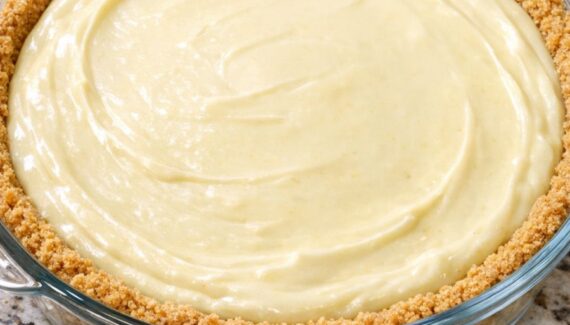
With just three simple pantry staples poured into a flaky pie crust and baked until golden and gently set, this pie is proof that the most comforting things in life rarely require much fuss. If you’ve never tried it, think of it as a warm, custardy sweetness with a paper-thin crystallized sugar top that crackles just slightly when your fork breaks through. It’s almost impossibly good for something so simple.
Ingredients
- 1 unbaked 9-inch pie crust (homemade or store-bought)
- 1 cup granulated white sugar
- 1 cup heavy whipping cream
- 3 tablespoons all-purpose flour
Optional but Lovely Additions
- 1/2 teaspoon pure vanilla extract for a warm, deeper flavor
- A pinch of nutmeg or cinnamon dusted over the top before baking
- A tiny pinch of salt to balance the sweetness
Method
- Preheat your oven to 425°F (220°C). Place your unbaked pie crust into a 9-inch glass pie dish and crimp or flute the edges as desired. Set it aside while you prepare the filling.
- In a medium mixing bowl, whisk together the granulated sugar and flour until they are fully combined and there are no clumps. This step is important because the flour is what helps the filling set into that silky, just-firm texture.
- Pour in the heavy cream and whisk everything together until smooth. If you’re using vanilla extract, stir it in now. The mixture will look thin at this point — that’s perfectly normal.
- Carefully pour the filling into your prepared pie crust, making sure it doesn’t spill over the edges. The filling will be quite liquid before baking.
- Place the pie on the center rack of your preheated oven. Bake at 425°F for 10 minutes, then reduce the temperature to 375°F (190°C) and continue baking for an additional 25 to 30 minutes, or until the filling is set around the edges and has just a gentle wobble in the very center.
- Remove the pie from the oven and let it cool completely on a wire rack. As it cools, the top will form that beautiful, lightly crystallized sugar surface that makes this pie so iconic.
- Slice and serve at room temperature or slightly chilled. A dollop of unsweetened whipped cream alongside is never a bad idea.
Why This Pie Has Lasted Generations
Sugar pie, sometimes called desperation pie, was a common recipe in households across the American Midwest and South during the Great Depression and other hard economic times. When fresh fruits were out of season and eggs were scarce, resourceful home cooks turned to whatever was in the pantry. Flour, sugar, and cream — three things that almost anyone could manage to keep on hand — became the foundation of a dessert that was nothing short of extraordinary.
The beauty of this recipe isn’t just its simplicity. It’s that it tastes like something far more complicated than it actually is. The cream caramelizes gently as it bakes, the sugar dissolves into a luscious filling, and the flour does its quiet work holding everything together into a sliceable, gorgeous pie that looks like it came from a professional bakery.
Tips for Getting It Just Right
Make sure your pie crust is truly unbaked before adding the filling. A pre-baked or par-baked crust will overbrown before the filling has time to set properly. If your crust edges start to brown too quickly during baking, tent them loosely with small strips of aluminum foil or use a pie crust shield.
Don’t rush the cooling process. The filling needs time to fully set as it cools, and cutting into it too early will give you a runny result. Let it rest for at least two hours at room temperature before slicing.
Store any leftovers covered in the refrigerator for up to three days. The pie actually tastes wonderful cold straight from the fridge the next day — the texture firms up beautifully and the flavors deepen overnight.
A Recipe Worth Passing Down
Some recipes are tied to a moment in history. This one is tied to a feeling — the warmth of a grandmother’s kitchen, the sound of Sunday afternoon, the simple joy of a dessert that asks nothing of you except to slow down and enjoy it. Make it once and you’ll understand exactly why kids beg for it every single week.