The Difference Between Safe and Deadly
Cassava is not inherently dangerous when handled correctly. Traditional preparation methods remove the toxins and make it safe to eat. These include:
-
Peeling the root thoroughly
-
Soaking it in water for extended periods
-
Fermenting it
-
Drying or cooking it completely
Problems arise when these steps are rushed or skipped, often during famine or emergencies when people are desperate for food.
A Food of Survival and Risk
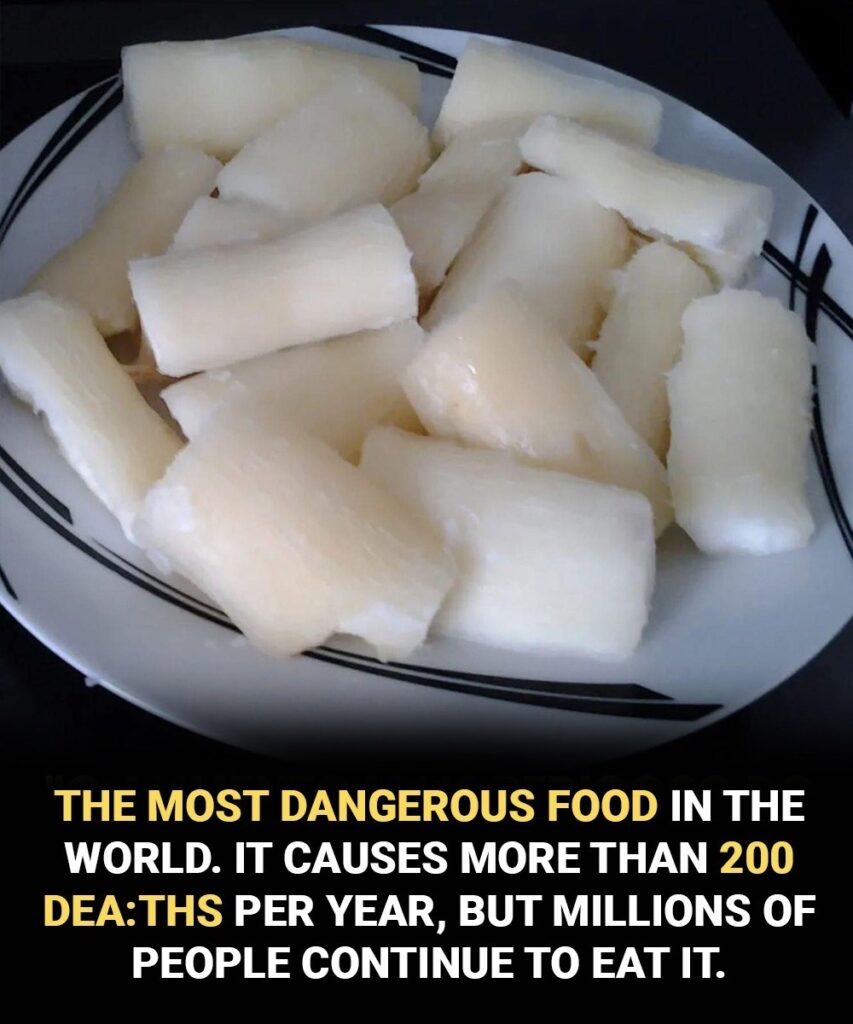
The image reflects a harsh reality: a food that sustains millions also carries silent danger. In developed countries, cassava products are usually processed safely before reaching consumers. In vulnerable regions, however, lack of resources, education, or time can turn a staple into a threat.
Health organizations continue to work with communities to promote safer processing methods, reducing illness and saving lives—without taking away a food source people depend on.
Final Thoughts
Cassava is a powerful reminder that food is not just about taste or appearance. It’s about knowledge, culture, and survival. The same root that can kill if mishandled can also nourish generations when prepared with care.
The danger doesn’t lie on the plate—it lies in what people are forced to skip when survival is on the line.