Can You Just Cook the Green Out?
This is the most common misconception in the kitchen. Cooking, boiling, baking, or frying does not destroy solanine.
Because solanine is incredibly heat-stable, exposing it to a hot oven or boiling water will not lower the toxicity levels. If a potato is unsafe raw, it will be just as unsafe after it has been cooked.
What Should You Do with Your Batch?
Before you throw the whole bag in the trash, assess how deep the green goes. Here is your step-by-step action plan:
1. Check the Depth of the Green
Take a sharp paring knife and slice into one of the potatoes.
-
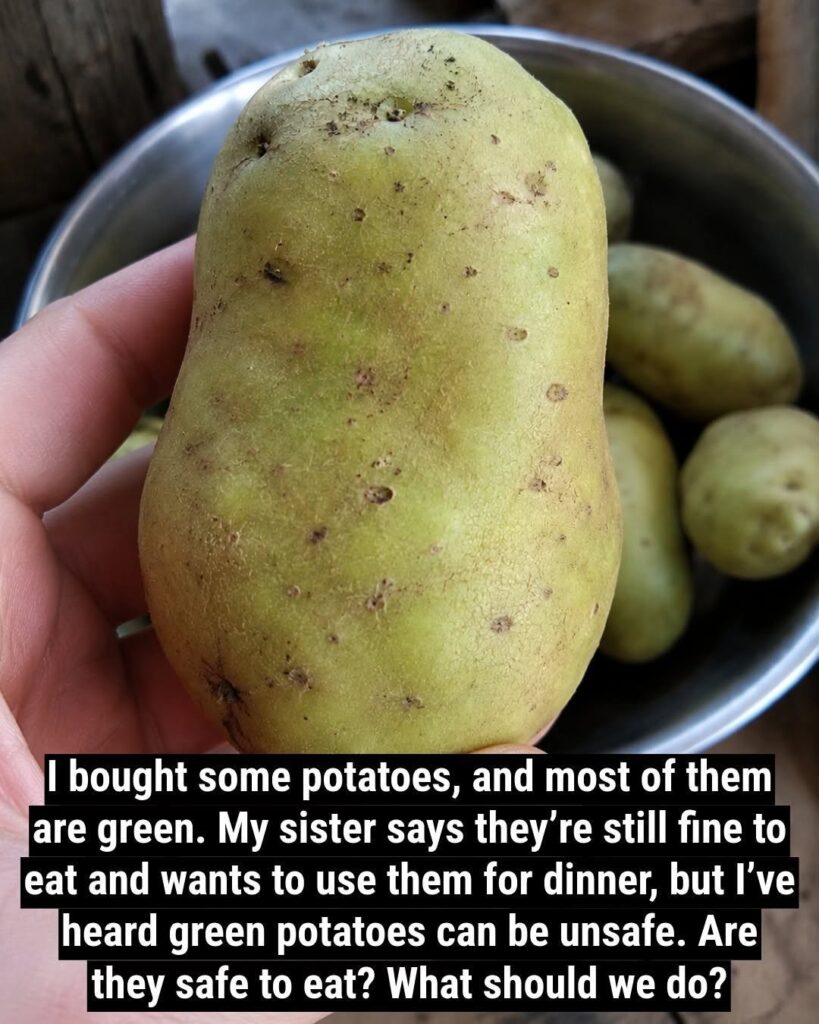
If it’s just a tiny spot: If the green color is isolated strictly to a small patch of skin or a shallow layer just beneath the surface, you can safely salvage the potato. Cut away the green skin and the flesh beneath it entirely, ensuring you only use the perfectly white or yellow potato meat left behind.
-
If it goes deep into the flesh: If the green color penetrates deeply into the interior of the potato, it is past the point of saving. Discard it.
2. Follow the “Most of Them” Rule
Since you noted that most of your potatoes are green, you need to look at the bag as a whole. If the entire batch is thoroughly tinted green throughout, it is highly recommended to err on the side of caution and toss them out. It is simply not worth risking a bout of food poisoning over a side dish.
How to Prevent It Next Time
To stop your future spuds from turning green, the key is proper storage. Potatoes love environments that mimic being underground: cool, dark, and dry.
Keep them out of wire baskets on the countertop where kitchen light can hit them. Instead, store them in a brown paper bag, a cardboard box, or a dark pantry closet. This keeps the light out while still allowing the potatoes to breathe, ensuring your next dinner prep is completely stress-free!