Is It Ever a Problem?
Most of the time, this sensation is totally normal. But there are a few cases where you should pay closer attention.
It’s likely normal if:
- The feeling is mild and goes away quickly
- There’s no swelling or rash
- Your child can still eat pineapple without distress
It could be something more if:
- There is swelling of the lips, tongue, or throat
- Your child develops hives or itching elsewhere
- Breathing becomes difficult
- The reaction happens with many different fruits
In those cases, it might point to a mild food sensitivity or even a fruit-related allergy such as Oral Allergy Syndrome, and it’s worth checking with a doctor.
Ways to Reduce the Tingling
If your child enjoys pineapple but doesn’t like the sensation, you can make it gentler:
- Choose very ripe pineapple (less acidic and milder)
- Pair it with yogurt or milk (dairy helps neutralize enzymes)
- Try cooked pineapple (heat breaks down bromelain)
- Cut it into smaller pieces to reduce contact time
Canned pineapple usually causes less tingling because the enzyme is partially deactivated during processing.
A Fun Way to Explain It to Your Child
You can tell your child something like:
“Pineapple has a special juice that tickles your tongue a little. It’s not hurting you—it just has a tiny superpower!”
This helps them understand the sensation without fear.
Final Thoughts
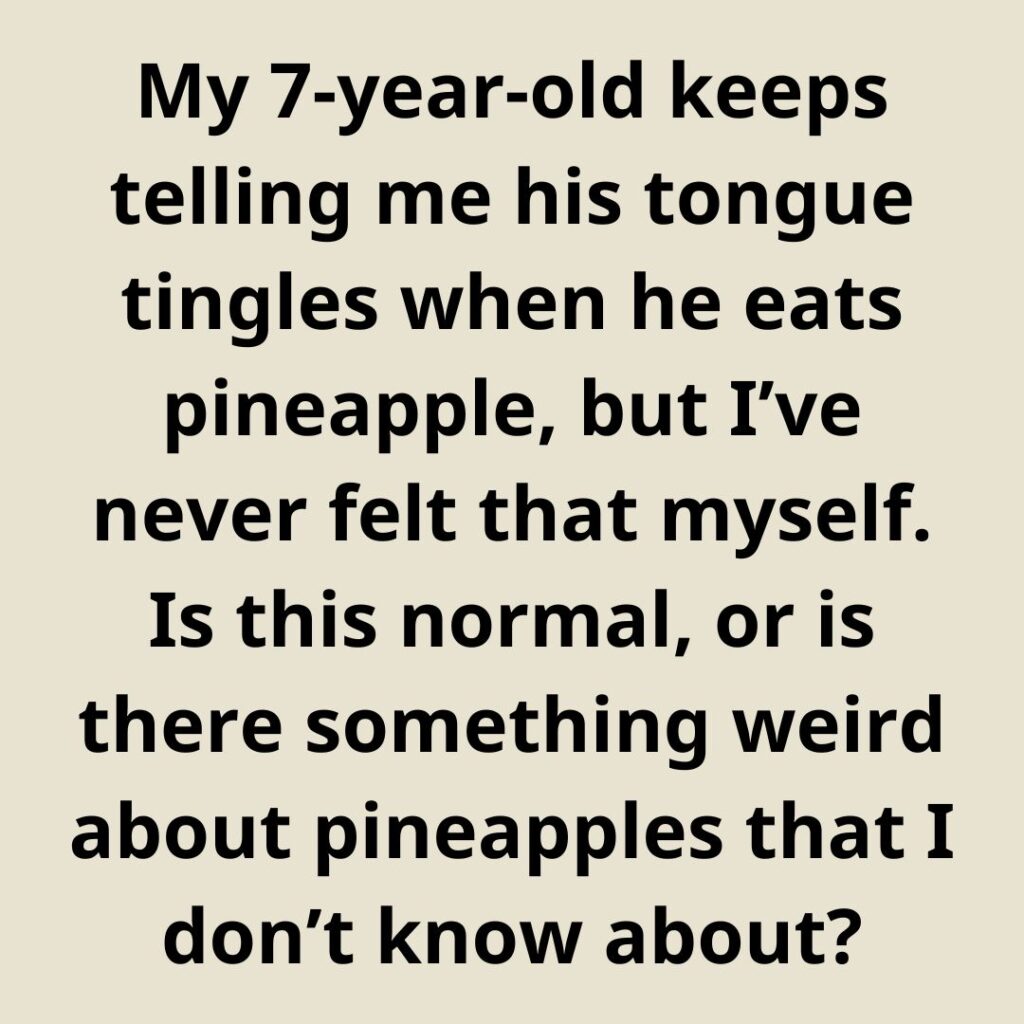
If your 7-year-old says pineapple makes their tongue tingle, they’re not imagining things—and there’s nothing “weird” about it. It’s a natural reaction caused by bromelain, and many people experience it to some degree.
As long as there are no signs of an allergic reaction, it’s perfectly safe—and just one of those quirky, fascinating things about how food interacts with our bodies.
Sometimes, kids notice what adults overlook… and in this case, they’re absolutely right.