Breaking Down the Styles
While it won’t tell you your productivity score, your position does reveal a lot about your physical health:
-
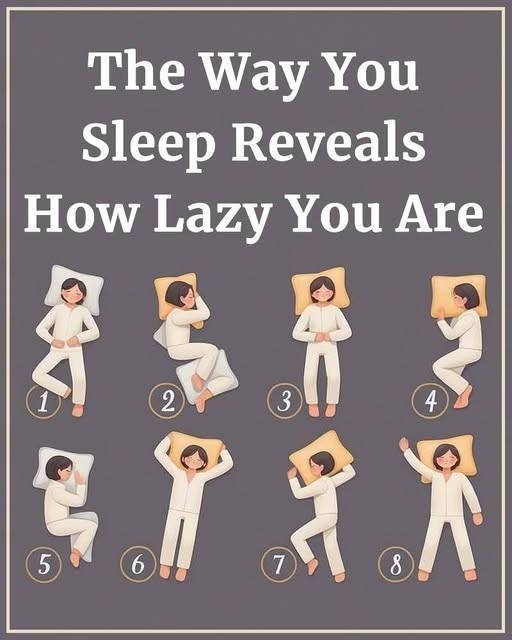
The Back Sleepers (1, 3, 6, 8): Known as the “Soldier” or “Starfish,” this is great for spine alignment. However, if you’re a #6 or #8, you’re much more likely to snore or experience sleep apnea because gravity isn’t doing your airways any favors.
-
The Side Sleepers (2, 4, 5): The most common way to sleep. It’s excellent for digestion (especially on the left side) and reduces heartburn. Position #2, the “Pillow Hugger,” often indicates a need for joint support to keep the hips aligned.
-
The Stomach Sleeper (7): Often called the “Freefaller.” While it might feel cozy, it’s usually the toughest on your neck and lower back. If this is you, you’re not “lazy”—you’re likely just waking up with a stiff neck!
Why Do We Move?
The average person shifts positions 10 to 40 times per night. Your body is a smart machine; it moves to prevent pressure sores and to keep blood circulating. If you wake up in Position #4 but fell asleep in Position #1, it just means your subconscious was doing some “night shift” maintenance.
The Real “Laziness” Indicator
If you really want to know if your sleep habits are affecting your drive, look at duration and quality rather than posture.
-
Oversleeping (9+ hours): Can lead to “sleep drunkenness,” making you feel sluggish.
-
Undersleeping (under 6 hours): Crushes your focus and motivation.
The Verdict: Don’t let a diagram tell you who you are. Whether you’re a #3 or a #7, the only thing your sleep position truly reveals is how you prefer to dream.
Which number are you tonight? Let us know in the comments