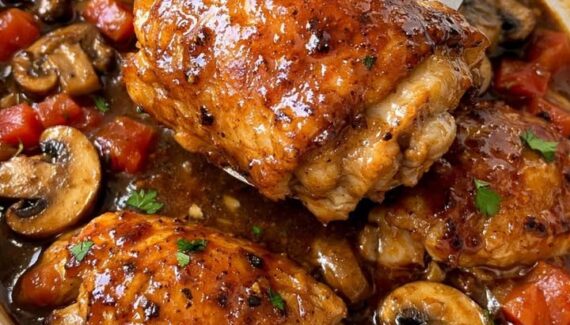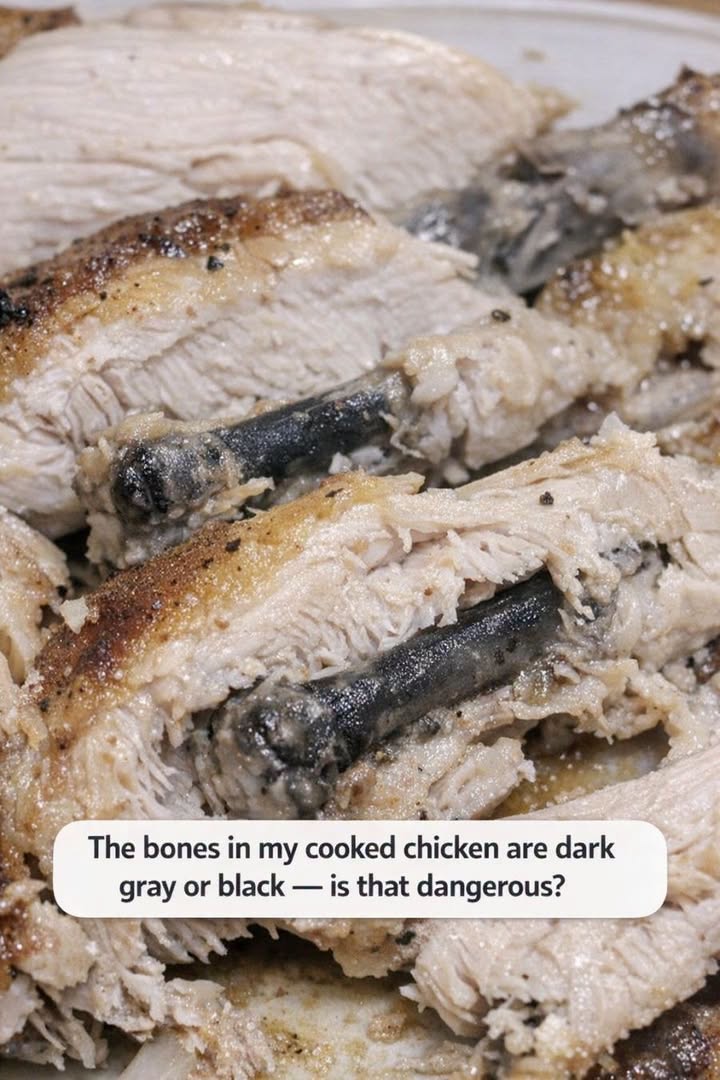
You carve into a beautifully roasted chicken thigh or drumstick, only to find that the bone itself is a shocking shade of dark gray, deep purple, or solid black. As shown in the image, this discoloration can look incredibly off-putting, leading many home cooks to fear that the meat has spoiled, is diseased, or is dangerous to eat.
The short answer is no, it is not dangerous at all. If your chicken was cooked to a safe internal temperature of 165°F (74°C), the meat and bones are completely safe to consume. What you are seeing is actually a completely natural, biological reaction rather than a sign of spoilage.
The Science Behind the Black Bones
The dark discoloration you see around poultry bones is a very common phenomenon caused by bone marrow seepage. Here is exactly how it happens:
-
Porous Young Bones: Most commercial chickens available in grocery stores are young broilers. Because these chickens are young, their bones are thin, highly porous, and have not completely calcified.
-
The Deep Freeze Effect: When commercial chicken is flash-frozen for transport, the water inside the bone marrow expands. This expansion forces hemoglobin—the iron-rich red pigment found in blood and marrow—to seep right through the porous bone walls and into the surrounding meat.
-
The Cooking Reaction: When you heat the chicken, that trapped hemoglobin undergoes a rapid chemical shift.The heat oxidizes and denatures the pigment, turning it from deep red into a dramatic gray, brown, or charcoal black hue.
Because leg and thigh bones contain a significantly higher blood supply than breast bones, this discoloration happens almost exclusively in dark meat cuts.
+--------------------------------------------------------------------------+
|                     THE BONE DARKENING PROCESS                           |
+-------------------+--------------------+---------------------------------+
|   1. POROUS BONES |   2. SEEPAGE       |   3. COOKING                    |
+-------------------+--------------------+---------------------------------+
| Young chicken     | Freezing forces    | Heat oxidizes the hemoglobin,   |
| bones are thin    | marrow pigment out | turning it gray or black        |
| and uncalcified.  | through the bone.  | (Safe to eat!)                  |
+-------------------+--------------------+---------------------------------+
How to Minimize Dark Bones
While it is 100% safe to eat, it can definitely ruin the aesthetic presentation of your dish. If you want to avoid this look in the future, try these quick culinary adjustments:
Please Head On keep on Reading (>) (◕‿◕