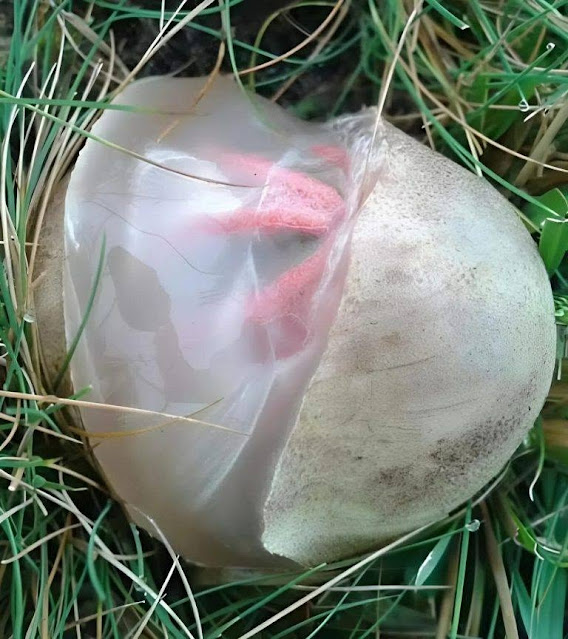
Imagine stepping outside into the garden on a calm morning, routine in hand, only to be hit with an overwhelming stench that rivals rotting meat. A quick search of the grass reveals no mischievous cats or decaying wildlife, but instead an otherworldly object resting in the lawn—a slimy, translucent orb with a glimpse of vibrant red tentacles suspended inside.
While it looks like something straight out of a science fiction movie, this strange discovery is actually a fascinating natural phenomenon: the “egg” stage of a stinkhorn fungus (most likely the Clathrus archeri, commonly known as the Devil’s Fingers or Octopus Stinkhorn).
What Is a Stinkhorn “Egg”?
Before this fungus blooms into its full, bizarre form, it develops underground or at soil level inside a gelatinous structure known as a volva or “witch’s egg.”
-
The Outer Shell: A leathery outer skin protects the organism as it grows.
-
The Jelly Layer: Inside the egg sits a thick, translucent layer of protective gel.
-
The Crimson Core: Embedded within the gelatin are the immature, bright red or pink arms of the stinkhorn mushroom, tightly folded and waiting for the right moisture conditions to burst open.
When the fungus matures, water pressure forces the red tentacles to erupt through the membrane in a matter of hours, unfolding into a dramatic, octopus-like star on the lawn.
Why Does It Smell So Terrible?
The foul, putrid odor isn’t a sign of decay—it’s a clever evolutionary strategy.
Unlike typical mushrooms that rely on the wind to carry their spores, stinkhorn fungi use insects. The dark, sticky slime covering the inner arms (called gleba) produces an intense smell resembling rotting flesh.
[ Stinkhorn Emerges ] ──► [ Emits Rotting Odor ] ──► [ Attracts Flies & Beetles ] ──► [ Spores Spread via Insects ]
Flies and carrion beetles are lured in by the scent, land on the sticky gel, and unknowingly carry the spores away on their feet and bodies to colonize new soil.
Is It Harmful to Gardens or Pets?
Finding a stinkhorn egg can be alarming, but there is no need to panic: