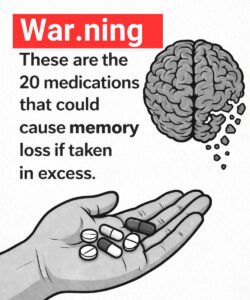
20 Medications Linked to Memory Loss When Taken in Excess
1. Benzodiazepines
Examples: alprazolam, diazepam, lorazepam
Used for anxiety and sleep, but high doses can impair short-term memory and learning.
2. Sleep Aids (Sedative-Hypnotics)
Examples: zolpidem, eszopiclone
Overuse can cause next-day confusion and amnesia-like effects.
3. Opioid Pain Medications
Examples: oxycodone, hydrocodone, morphine
Can dull cognition and memory, especially at higher doses.
4. Anticholinergic Drugs
Examples: diphenhydramine (Benadryl), certain bladder meds
These directly interfere with acetylcholine, a key memory chemical.
5. Tricyclic Antidepressants
Examples: amitriptyline, imipramine
Older antidepressants with strong anticholinergic effects.
6. Muscle Relaxants
Examples: cyclobenzaprine, carisoprodol
Often sedating and linked to mental fog when overused.
7. Anti-Seizure Medications
Examples: topiramate, valproate
High doses may affect word recall and processing speed.
8. Antipsychotic Medications
Examples: quetiapine, olanzapine
Can cause cognitive slowing at elevated doses.
9. Corticosteroids
Examples: prednisone
Long-term or high-dose use may impact memory and mood.
10. Strong Pain Relievers (Non-Opioid)
Examples: high-dose tramadol
Can affect cognition when misused or combined with other sedatives.
11. Parkinson’s Medications
Examples: dopamine agonists
Overuse can cause confusion or hallucinations affecting memory.
12. Antihistamines (First Generation)
Examples: chlorpheniramine
More likely to cause brain fog than newer allergy meds.
13. Anti-Nausea Medications
Examples: promethazine
Sedation and confusion increase with higher doses.
14. Blood Pressure Medications (Certain Types)
Examples: centrally acting agents like clonidine
May cause drowsiness and mental slowing.
15. Cholesterol-Lowering Drugs (Rarely)
Examples: statins, at high doses in sensitive individuals
Reports of reversible memory issues exist, though uncommon.
16. Chemotherapy Drugs
“Chemo brain” is a recognized phenomenon
Higher cumulative exposure can affect memory and focus.
17. ADHD Medications (Misuse)
Examples: amphetamines at excessive doses
Can lead to cognitive burnout and memory problems.
18. Anti-Anxiety Supplements with Sedative Effects
Examples: high-dose valerian
“Natural” doesn’t always mean harmless.
19. Alcohol (Especially with Medications)
Alcohol combined with sedatives magnifies memory impairment.
20. Polypharmacy (Too Many Meds at Once)
Even safe doses can cause memory issues when combined improperly.
What This Doesn’t Mean
-
It does not mean you should stop medications on your own
-
It does not mean these drugs always cause memory loss
-
It does not mean memory issues are permanent
In many cases, medication-related memory problems are reversible once dosing is corrected.
When to Pay Attention
Consider talking to a healthcare professional if you notice:
-
Sudden forgetfulness after a dosage change
-
Trouble forming new memories
-
Increased confusion or mental fog
-
Family members noticing changes before you do
A simple medication review can often uncover the cause.
The Takeaway
Medications are powerful tools—but power cuts both ways. When taken in excess, even common prescriptions can quietly interfere with memory and mental clarity. Awareness, proper dosing, and regular check-ins with a doctor or pharmacist are the best safeguards.
Your brain is worth protecting.