How to Make Them: The Skillet Method
1. The “Scalding” Process
Place your cornmeal and salt in a heat-proof bowl. Slowly pour the boiling water over the meal while stirring constantly. You aren’t looking for a thin batter like a pancake; you want a thick, slightly stiff paste that holds its shape. Let the mixture sit for about 5 to 10 minutes. This allows the cornmeal to hydrate and soften.
2. The Heat
Place a heavy skillet (cast iron is king here) over medium-high heat. Add enough oil or fat to generously coat the bottom of the pan—about 1/4 inch deep. You want enough oil to “shallow fry” the cakes, which creates that iconic lacey, crispy edge.
3. The Sear
Wetting your hands slightly to prevent sticking, scoop up about 2 tablespoons of the cornmeal dough and pat it into a flat disc, about 1/2 inch thick. Carefully drop the discs into the hot oil. You should hear an immediate, aggressive sizzle.
4. The Golden Rule
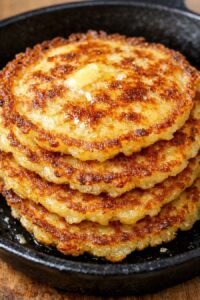
Fry for 3–4 minutes per side. Do not rush them! The cornmeal needs time to develop a structural crust. Flip them only when the edges are deep golden brown and the cake feels sturdy.
How to Eat a Hoecake
The beauty of the “Poor Man’s” version is its versatility. It acts as a blank canvas for whatever you have on hand:
-
Savory: Serve them alongside a bowl of pinto beans, collard greens, or fried salt pork. They are the ultimate tool for “sopping” up juices.
-
Sweet: Drizzle them with a bit of honey, maple syrup, or molasses while they are still steaming hot.
-
The “Bread” Substitute: Split them open and spread with a little butter for a quick snack that beats a slice of toast any day.
A Modern Touch
While the original recipe is strictly corn and water, if you want to “rich” them up slightly, you can stir in a tablespoon of melted butter or a handful of chopped green onions into the dough before frying. Regardless of how you dress them, the Hoecake remains a humble reminder that the best meals are often the ones made from almost nothing at all