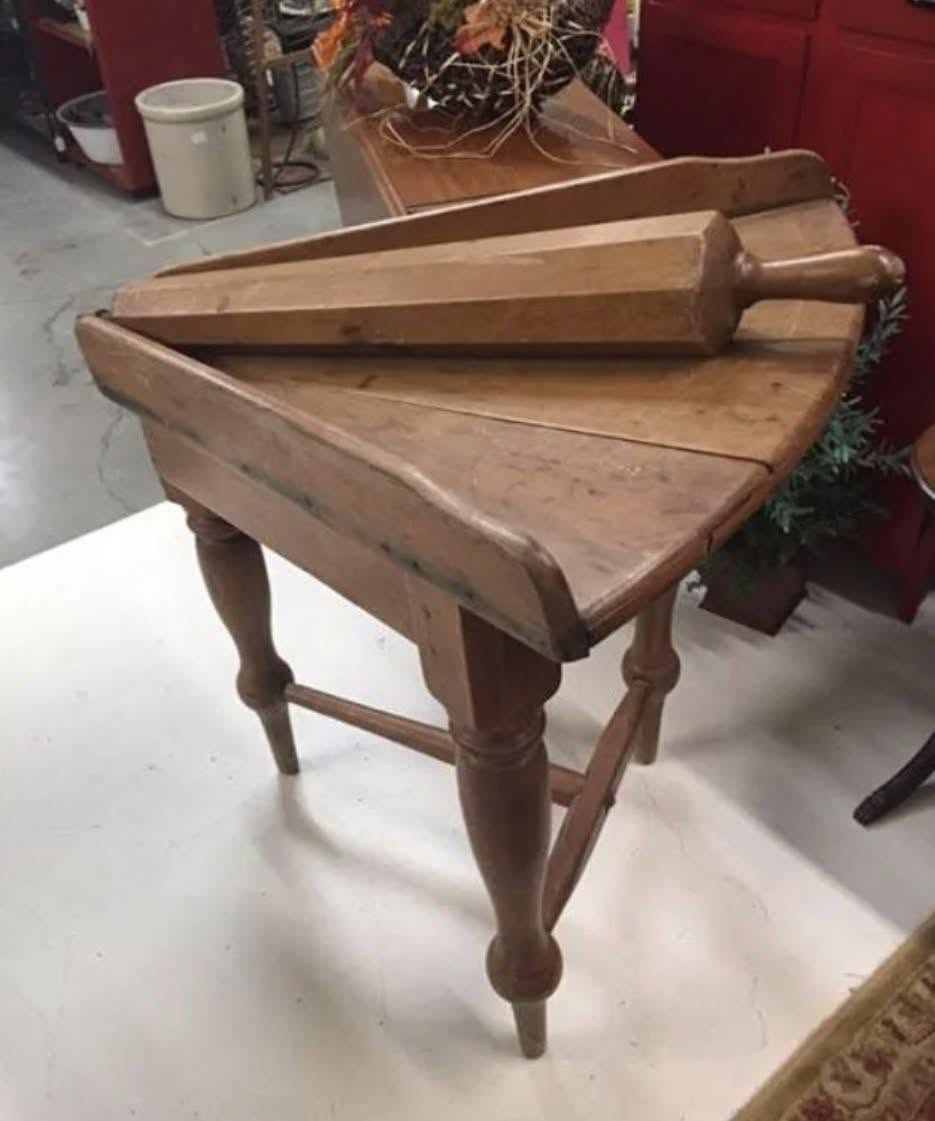
How to Use a Traditional Biscuit Brake
If you are lucky enough to own a restored, food-safe antique biscuit brake, or simply want to know how our ancestors operated this unique machine, here is how the process works:
1. Mix the Dough
A traditional beaten biscuit dough is incredibly simple and much stiffer than modern biscuit dough. It typically consists of flour, salt, cold lard (or butter), and just enough ice water or cold milk to bring it together into a tight, dry ball.
2. Position the Dough
Lightly flour the surface of the biscuit table. Place your stiff ball of dough near the wide end of the table, directly in the path of the heavy rolling pin.
3. Roll and Crimp
Grasping the carved handle of the rolling pin, firmly push and pull the roller back and forth across the dough. Because the pin is pivoted at the top, it will naturally arc across the table. The heavy, flat-sided ridges will stamp, stretch, and knead the stiff dough with significant force.
4. Fold and Repeat
After rolling the dough out flat, fold it over on itself (a process similar to laminating pastry dough). Roll it out again with the faceted pin. Repeat this process of rolling, folding, and rotating the dough continuously.
Instead of 45 minutes of exhausting mallet-pounding, the biscuit brake cuts the time down to about 10 to 15 minutes. You know the dough is ready when it transitions from a rough texture to an incredibly smooth, elastic, satin-like sheet that audibly “pops” or blisters as the roller passes over it.
5. Cut and Bake
Once the dough is properly blistered, roll it out to a final thickness of about 1/3 to 1/2 inch. Cut out small, round biscuits using a sharp cutter. Traditionally, the tops are pricked multiple times with a fork (a process called “docking”) to allow steam to escape evenly, then baked in a hot oven until pale white on top and lightly golden on the bottom.
A True Kitchen Conversation Piece
While modern baking powder has made the biscuit brake obsolete for daily cooking, these tables remain highly prized by furniture collectors and history enthusiasts alike. They serve as a striking reminder of the ingenuity of historical craftsmanship—and the incredible amount of effort that used to go into a single bite of breakfast