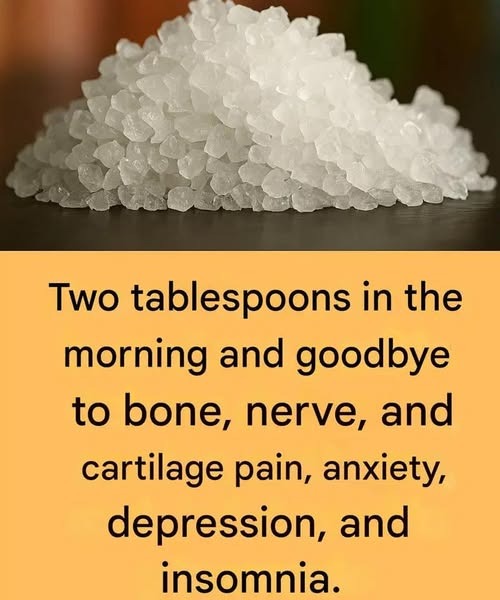
A small pile of white crystals often sparks big promises. Across social media, images like this are paired with claims that “two tablespoons in the morning” can erase bone pain, nerve problems, anxiety, depression, and insomnia. It sounds simple, natural, and powerful.
But what’s really in the picture — and what is it actually good for?
What You’re Likely Seeing
The crystals resemble coarse salt, commonly:
-
Sea salt
-
Rock salt
-
Himalayan pink salt (light varieties can look white)
-
Occasionally confused with Epsom salt (magnesium sulfate), which is not the same as edible salt
Each has different uses, and confusing them can lead to misuse.
Why These Claims Spread
Salt is essential to life. It plays a role in:
-
Nerve signaling
-
Muscle contraction
-
Fluid balance
Because it’s essential, it’s easy to stretch that truth into exaggerated health promises. However, essential does not mean curative.
There is no scientific evidence that eating two tablespoons of salt can cure bone, nerve, cartilage pain, anxiety, depression, or insomnia.
In fact, two tablespoons of edible salt greatly exceed safe daily sodium intake and may raise blood pressure or strain the heart and kidneys.
Safe and Practical Ways to Use Salt
1. In Cooking (Moderation Is Key)
Use salt to:
-
Enhance flavor
-
Support electrolyte balance when consumed in normal amounts
How to use:
✔ A pinch in meals
✖ Not spoonfuls on an empty stomach
2. Salt Water Gargle (Throat Comfort)
A time-tested remedy for sore throats and mouth irritation.
How to use: