The Ultimate Checklist: Safe to Eat or Time to Toss?
You don’t necessarily have to throw away every potato that has started to grow. Before you decide to bake it, run it through this quick checklist:
1. Are the sprouts small and few?
-
Safe: If there are just a few tiny, nubby sprouts starting to peek out, the rest of the potato is perfectly fine.
-
Action: Take a paring knife or the sharp tip of a vegetable peeler and gouge out the “eye” where the sprout was growing. Cut a small radius around it just to be safe.
2. Is the potato still firm?
-
Safe: If the potato is rock-hard and firm when you squeeze it, the starches are intact and the toxin levels in the flesh remain very low.
-
Toss: If the potato is soft, shriveled, wrinkled, or feels spongy, the spud has used up its energy to grow those sprouts. Toss it in the compost pile.
3. Is there a green tint under the skin?
-
Safe-ish: Green skin means chlorophyll is forming due to light exposure, which runs hand-in-hand with solanine production. If it’s just a tiny patch, peel a deep layer of the skin away until you see purely white or yellow flesh.
-
Toss: If a significant portion of the potato is green beneath the skin, do not eat it. Baking or boiling does not destroy solanine, so cooking won’t save it.
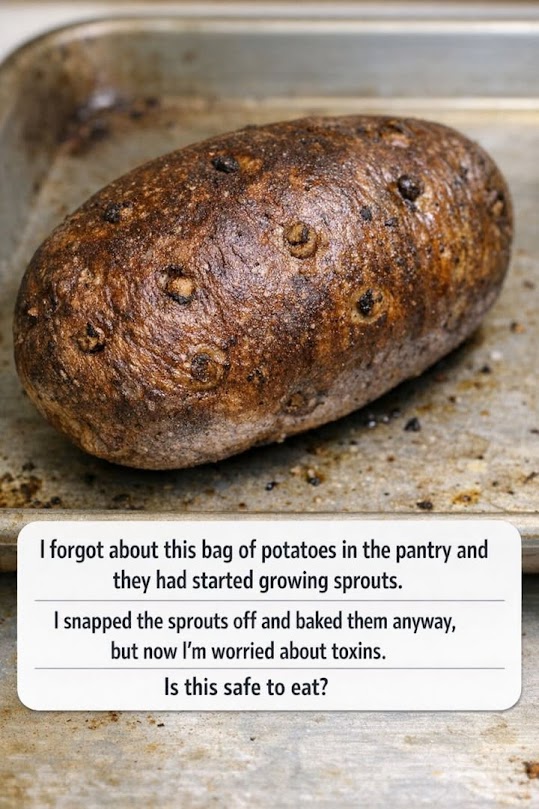
Looking closely at the potato in the photo, the cook snapped the long sprouts off before baking, leaving behind dark, hollowed rings where the sprouts used to live.
If this potato was still completely firm to the touch before it hit the oven, and the flesh inside shows no green discoloration, it is generally considered safe to eat once you cut away those deep, dark eye spots. However, because those spots concentrate toxins, simply snapping the top off isn’t quite enough—digging out the base of the sprout with a knife before cooking is always the safest bet!
💡 Pro-Tip: How to Prevent Sprouting
To keep your next batch of potatoes from growing legs, store them in a cool, dark, and dry place (like a brown paper bag in a dark closet). Crucially, keep them away from your onions! Onions release ethylene gas as they ripen, which acts like an accelerator pedal for potato sprouting.