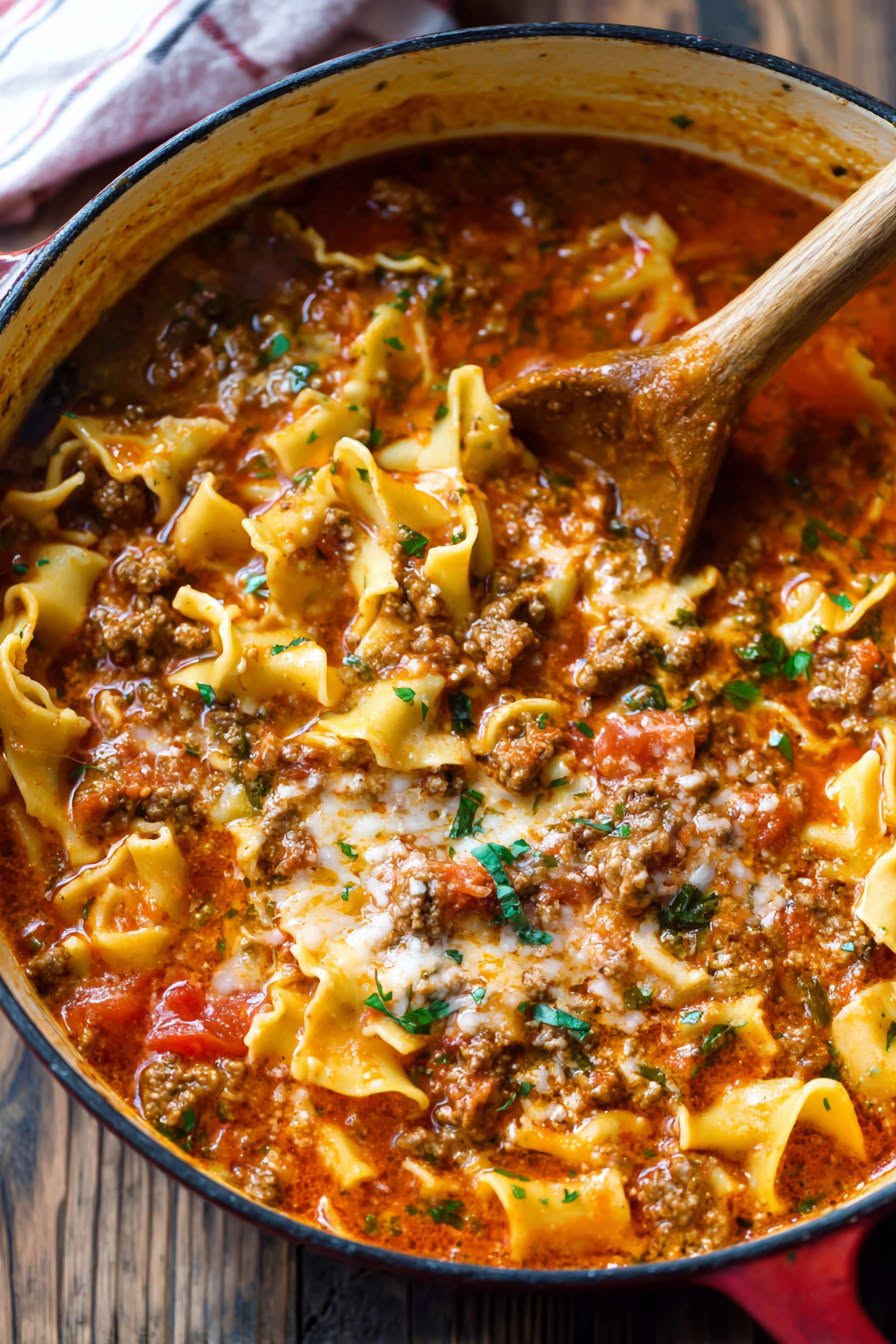
How to Make One-Pot Lasagna Soup
Step 1: Brown the Ground Beef
Place a large Dutch oven or heavy-bottomed soup pot over medium-high heat. Add the ground beef and cook for about 6–8 minutes, breaking it into small pieces with a wooden spoon.
Continue cooking until the beef is thoroughly browned. If there is excessive grease, carefully drain it before proceeding.
Browning the meat first creates a deeper, more savory foundation for the soup.
Step 2: Cook the Onion and Garlic
Add the diced onion to the pot and cook for 3–4 minutes, stirring occasionally, until softened.
Stir in the minced garlic and cook for another 30 seconds, just until fragrant. Avoid letting the garlic burn, as it can introduce a bitter flavor.
Step 3: Build the Tomato Base
Add the tomato paste and stir it into the beef and onion mixture. Cook for about one minute to deepen its flavor.
Pour in the crushed tomatoes and beef broth. Add the oregano, basil, Italian seasoning, red pepper flakes if using, salt, and black pepper.
Stir everything together, scraping the bottom of the pot to release any browned bits left behind by the beef.
Bring the mixture to a gentle boil.
Step 4: Cook the Lasagna Noodles
Break the lasagna noodles into rough bite-sized pieces and add them to the simmering soup.
Reduce the heat to medium-low and cook uncovered for approximately 10–15 minutes, stirring frequently to prevent the noodles from sticking together or settling on the bottom.
Check the package instructions and taste a piece toward the end of cooking. The noodles should be tender but still hold their shape.
If the broth becomes too thick before the pasta is ready, add a little extra broth or hot water.
Step 5: Finish With Parmesan
Once the noodles are cooked, reduce the heat to low and stir in the grated Parmesan cheese.
Taste the broth and adjust the seasonings as needed. If you prefer a thinner soup, add more broth until it reaches your desired consistency.
Allow the soup to rest for two or three minutes before serving. This gives the flavors a chance to come together while the cheese melts into the broth.
Step 6: Add the Cheesy Topping and Serve
Ladle the hot soup into individual bowls.
For an extra-creamy finish, combine the ricotta and mozzarella in a small bowl, then add a spoonful to each serving. Sprinkle with additional Parmesan and chopped fresh parsley or basil.
The ricotta softens into the hot soup, creating creamy pockets that resemble the cheese layers in traditional lasagna.
Serve immediately with crusty bread or garlic bread for dipping.
Grandma’s Best Tips for Perfect Lasagna Soup
Break the noodles into manageable pieces. Smaller pieces are easier to eat with a spoon and distribute more evenly throughout the soup.
Stir the pasta regularly. Lasagna noodles can stick to the bottom of the pot, especially as the broth begins to thicken.
Don’t overcook the noodles. Pasta continues absorbing liquid after cooking, so remove the pot from the heat as soon as the noodles are tender.
Adjust the broth before serving. If the soup has thickened more than you like, add warm broth a little at a time.
Grate your own Parmesan. Freshly grated cheese generally melts more smoothly than pre-grated varieties.
Add the ricotta at the end. Spoon it directly into individual bowls rather than boiling it in the pot. This preserves its creamy texture and creates a more attractive presentation.
Easy Variations to Try
One of the best things about lasagna soup is how easily it adapts to different tastes and ingredients.
Italian Sausage Lasagna Soup
Replace half or all of the ground beef with Italian sausage. Mild sausage gives the soup a richer, herbaceous flavor, while hot sausage adds a spicy kick.
If your sausage releases a lot of fat, drain the excess before adding the vegetables.
Creamy Lasagna Soup
For a creamier broth, stir in 1/2 cup of heavy cream during the final few minutes of cooking. Keep the heat low and avoid boiling the soup after adding the cream.
You can also add a spoonful of ricotta to each bowl for a creamy finish without changing the entire pot.
Vegetable Lasagna Soup
Add diced carrots, chopped zucchini, or sliced mushrooms with the onion. Let them soften before adding the tomato paste and broth.
Baby spinach can be stirred in during the final two minutes of cooking for extra color and freshness.
Spicy Lasagna Soup
Increase the red pepper flakes or use hot Italian sausage. A little heat balances the richness of the beef, tomato, and cheese.
Chicken Lasagna Soup
Use cooked, shredded chicken instead of ground beef and substitute chicken broth for beef broth. Italian seasoning, garlic, tomatoes, and Parmesan still provide plenty of flavor.
What to Serve With Lasagna Soup
Although this soup is a satisfying meal on its own, the right side dishes make dinner even better.
- Garlic bread: Perfect for soaking up the rich tomato broth.
- Crusty Italian bread: A simple accompaniment that adds texture and makes every drop of soup count.
- Fresh green salad: Lettuce, cucumber, tomatoes, and a light vinaigrette provide a refreshing contrast.
- Roasted vegetables: Roasted broccoli or green beans add color and balance to the meal.
- Extra Parmesan: Keep a small bowl on the table so everyone can finish their serving with more cheese.
For a cozy family dinner, serve the soup in deep bowls with warm bread and a simple salad on the side.
How to Store and Reheat Leftovers
Allow leftover soup to cool slightly, then transfer it to airtight containers and refrigerate within two hours of cooking. Store it in the refrigerator for up to 3–4 days.
Keep in mind that the noodles will continue absorbing broth as the soup sits. When reheating, add a splash of beef broth or water to loosen the consistency.
Reheat individual portions in the microwave, stirring halfway through, or warm the soup in a saucepan over medium-low heat until steaming hot throughout.
For freezing, the best option is to freeze the soup base without the noodles. Let the base cool, transfer it to freezer-safe containers, and freeze for up to three months. Thaw in the refrigerator, bring it to a simmer, and cook freshly added pasta until tender.
If freezing leftovers that already contain noodles, expect the pasta to soften more when reheated.
Frequently Asked Questions
Can I use a different type of pasta?
Absolutely. Mafalda pasta, rotini, bow ties, or broken pieces of other sturdy pasta work well. Cooking times will vary, so follow the package instructions and check for doneness.
Why is my lasagna soup too thick?
The pasta absorbs liquid as it cooks and continues doing so after the soup is refrigerated. Add extra broth until the soup reaches the consistency you prefer.
Can I make this soup ahead of time?
Yes. For the best texture, prepare the beef and tomato broth in advance, refrigerate it, and cook the noodles in the reheated soup shortly before serving. This keeps the pasta from becoming overly soft.
Can I make lasagna soup without beef?
Yes. Ground turkey, Italian sausage, or plant-based ground alternatives can be substituted. Adjust the seasonings and broth to complement your chosen protein.
What cheese works best for lasagna soup?
Parmesan adds a savory, salty flavor, while ricotta creates a creamy finish reminiscent of traditional lasagna. Mozzarella provides extra stretch and mild cheesiness. You can use one or combine all three.
A Cozy Bowl of Comfort for Any Night of the Week
This One-Pot Lasagna Soup brings together everything that makes lasagna such a beloved comfort food: savory meat, rich tomato sauce, tender pasta, and plenty of cheese. The difference is that you can enjoy all those flavors without assembling layers or waiting for a casserole to bake.
With straightforward ingredients and an easy cooking method, it’s a practical recipe for busy evenings and relaxed family dinners alike. Customize it with your favorite vegetables, choose your preferred meat, or finish each bowl with a generous spoonful of creamy ricotta.
Serve it piping hot with garlic bread, gather everyone around the table, and enjoy a comforting meal that feels like a warm hug in a bowl.
From our kitchen to yours, happy cooking!