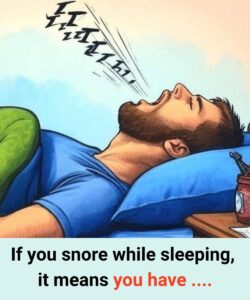
2. You Have a Positional Habit
If you only hear complaints when you’re flat on your back, you likely have position-dependent snoring.
-
The Physics: Gravity is not your friend here. When you lie on your back, the base of your tongue and soft palate collapse toward the back wall of your throat.
-
The Fix: Often, simply training yourself to sleep on your side (the “tennis ball sewn into the pajama back” trick) can silence the noise instantly.
3. You Have Chronic “Congestion Fatigue”
If you snore primarily during allergy season or when you have a cold, it means you have nasal resistance.
-
Think of your airway like a straw. If the top of the straw (your nose) is pinched, you have to suck harder to get air through. This creates a vacuum effect in your throat, pulling the soft tissues together and making them vibrate.
4. You May Have Obstructive Sleep Apnea (OSA)
This is the “red alert” version of snoring. If your snoring is interrupted by gasps, snorts, or long silences, it means you have temporary airway collapses.
-
Why it matters: This isn’t just noise; it’s a drop in blood oxygen levels. It forces your brain to “panic” and wake you up just enough to breathe, preventing you from ever reaching the restorative stages of deep sleep.
Comparison: Is it Just Snoring or Something More?
The Bottom Line
If you snore, it means you have a restriction—but the severity matters. While it might just be a sign that you enjoyed a glass of wine too close to bedtime (which relaxes the muscles further) or that your pillow is too flat, persistent snoring shouldn’t be ignored.
The Golden Rule: If your snoring is accompanied by daytime exhaustion or high blood pressure, it’s your body’s way of asking for a professional evaluation.
Your sleep should be a silent movie, not a rock concert. If the “music” is getting too loud, it might be time to look at the instrument